NCLEX-RN · Original practice · September 29, 2026
NCLEX-RN Renal and Fluid Balance Questions: Read the Trend
Fluid balance questions can look numerical, but they often test how you interpret a trend. One recorded output without a time interval or comparison rarely tells the whole story. Nursing judgment requires knowing whether the measurement is reliable, how it compares with previous measurements, and which related signs suggest a change in circulation or renal function.
The official NCSBN 2026 test plans describe the client-needs framework. This independent guide offers original teaching examples, not official or recalled exam items, diagnosis or treatment instructions.
Where should you start with intake and output?
Check the time period, route of collection and whether the record is complete. Look for changes across several observations rather than anchoring on an isolated measurement. Consider documented fluid orders, medications, symptoms and vital signs together. If a collection device may be obstructed or the measurement is uncertain, verify it before acting on a faulty trend.
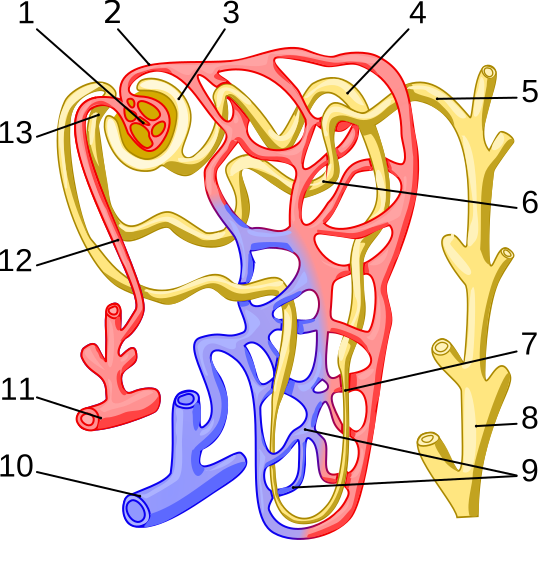
How the nephron illustration supports study
The labeled nephron shows where filtration and subsequent processing occur inside the kidney. It helps connect circulation and filtration conceptually, but it cannot show a patient's kidney function. A real clinical interpretation depends on history, measured output, laboratory results and the team assessment; the drawing is neither a test result nor a treatment guide.
Which findings call for follow-up?
An unexpected decrease in measured output, especially when paired with dizziness, hypotension, edema or another new sign, deserves a timely assessment and communication. A candidate should avoid prescribing fluid volumes or assuming dehydration from output alone. First confirm the observation and use the care team's process for escalating the finding.
Interpret lab values in context
Laboratory reference ranges vary by method and site. In a practice question, note the provided normal range and compare current and earlier values. If a question omits an essential reference, do not invent a universal cut-off. Summarize the concern in plain language: what changed, when it changed and what other cue supports your concern?
Free original example · NCLEX-RN
Try the question
An RN notes that the measured urine output has declined over successive rounds, and the client now reports lightheadedness. What should the RN do first?
- Assume the output was incorrectly recorded and ignore it
- Verify the output and promptly assess the client and communicate the change
- Independently stop all ordered fluids
- Wait until discharge to discuss the trend
Answer: B
A new declining output trend plus lightheadedness warrants prompt verification and assessment, followed by communication using the unit's escalation process. The available data do not justify an independent fluid change or a diagnosis.
This article question is separate from the paid workbooks and the existing question bank.
Common questions
Is one low urine-output entry enough to diagnose kidney injury?
No. Verify the time interval, measurement and broader clinical picture; a diagnosis requires more than one isolated entry.
Do I need to memorize a single lab range for every question?
Use the values and reference intervals supplied by the item or care setting. Ranges can vary by laboratory.
Keep studying
Study the nephron alongside cardiac perfusion and revisit how trends change your priority decisions.
Educational study content only. Local policy and jurisdiction determine real clinical practice. NCLEX® is a registered trademark of NCSBN; NCLEXVault is independent and not endorsed by NCSBN.